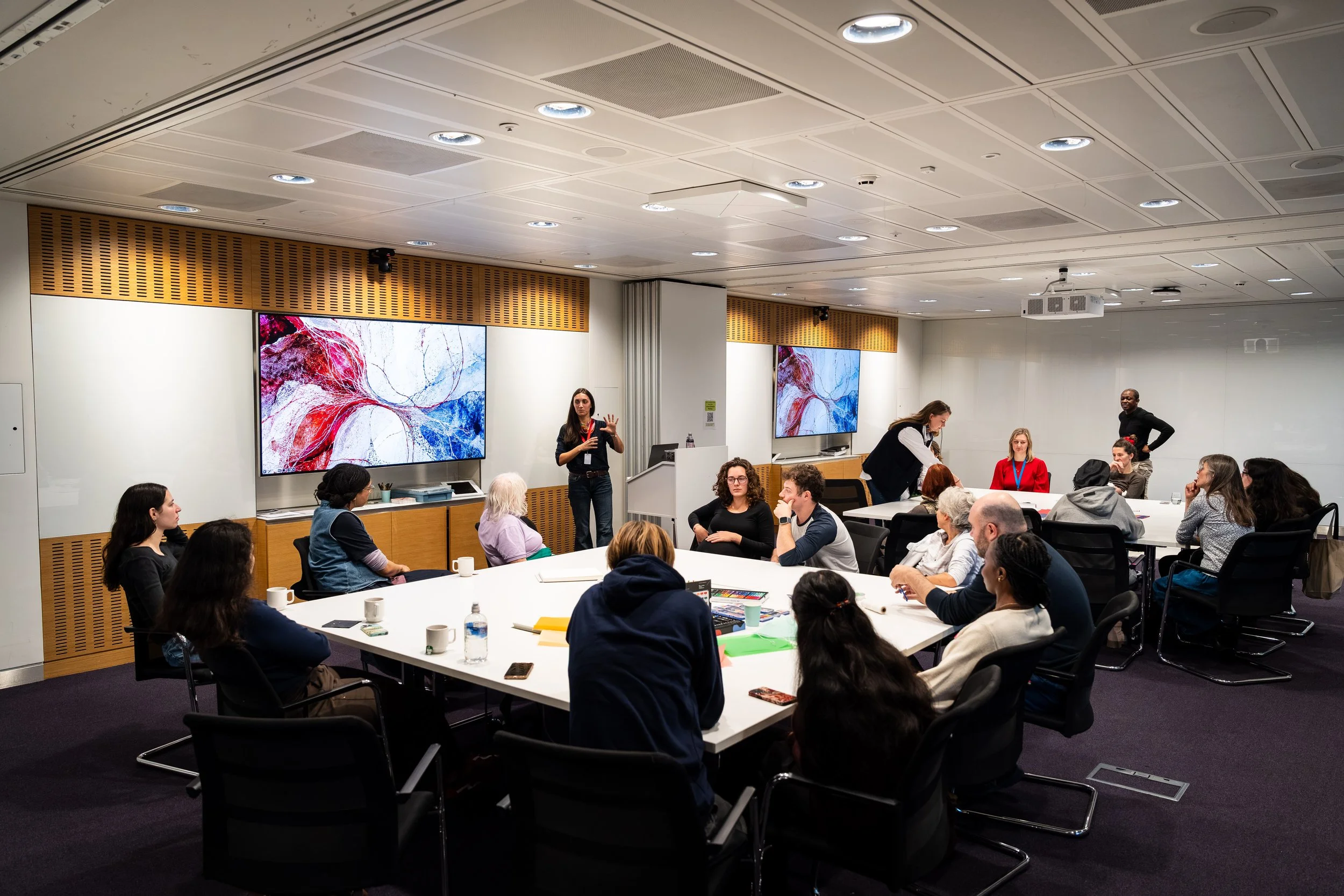
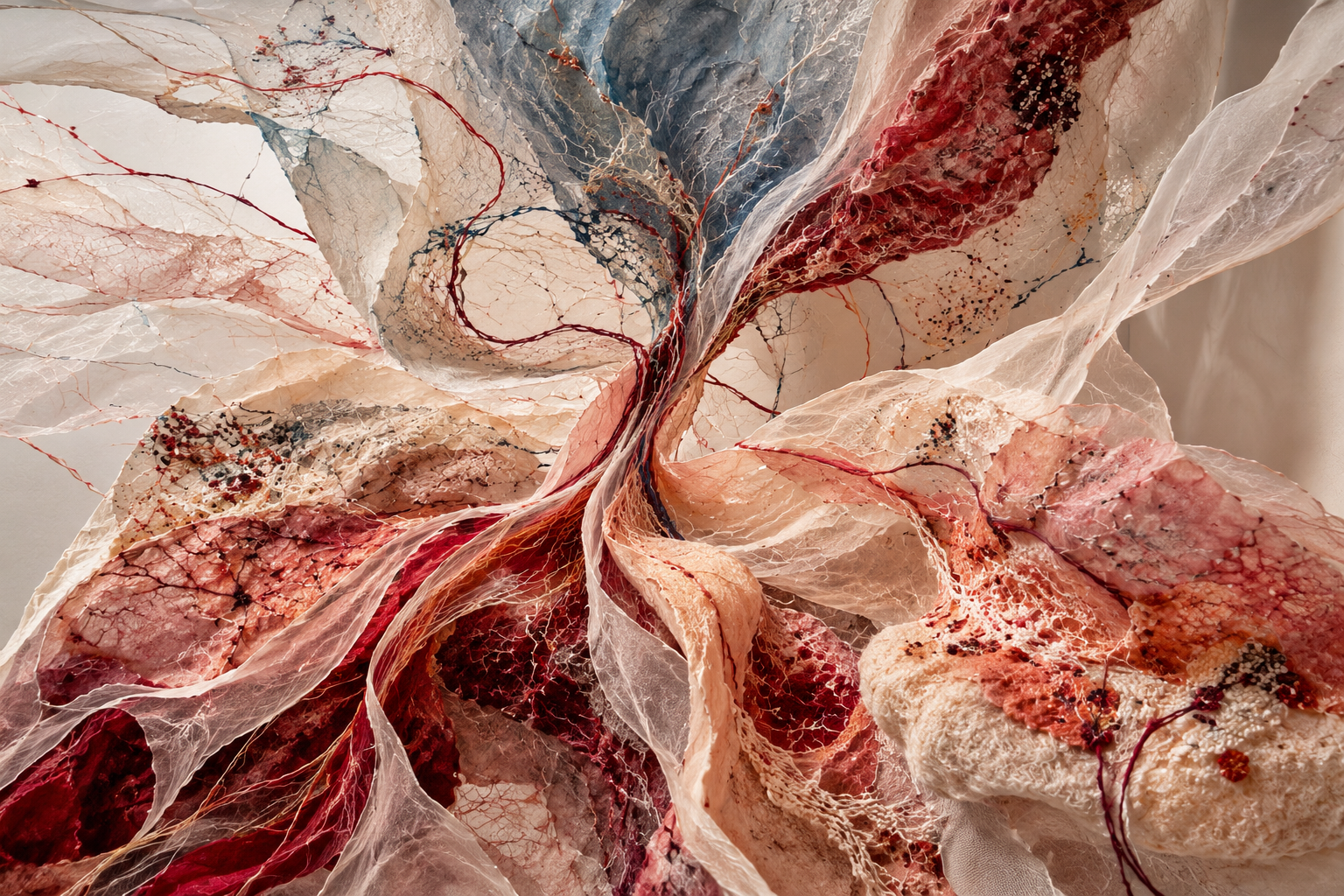
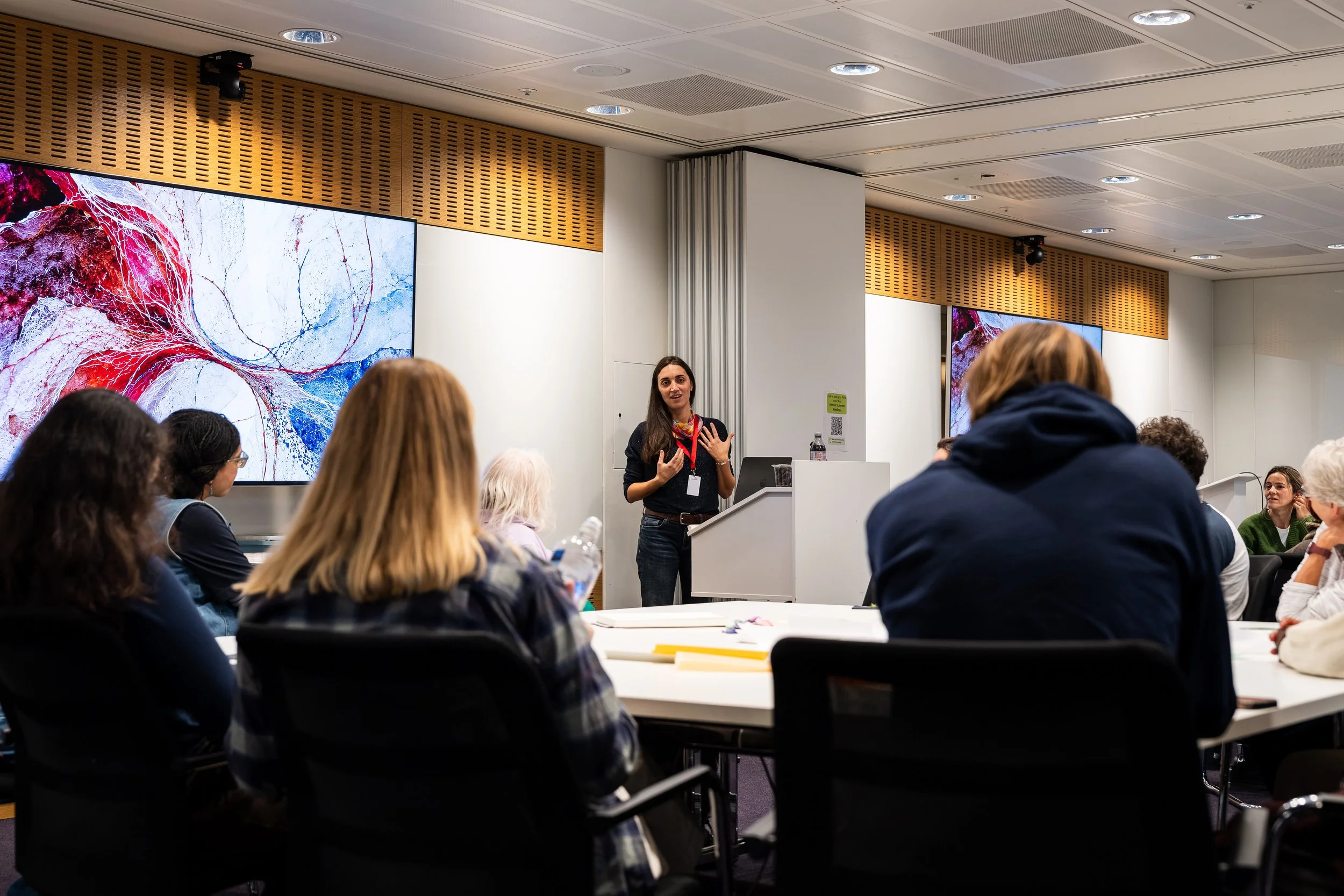
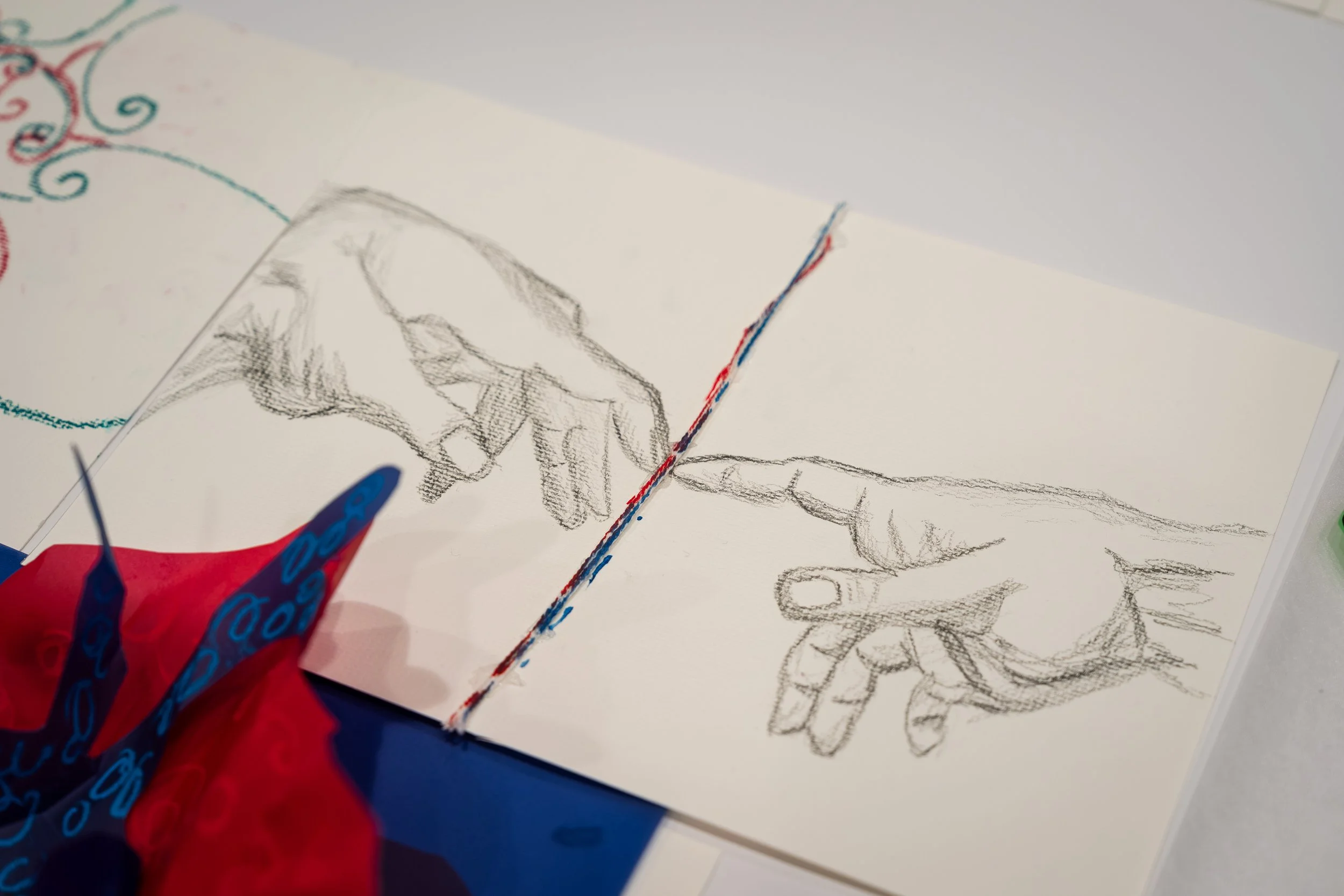
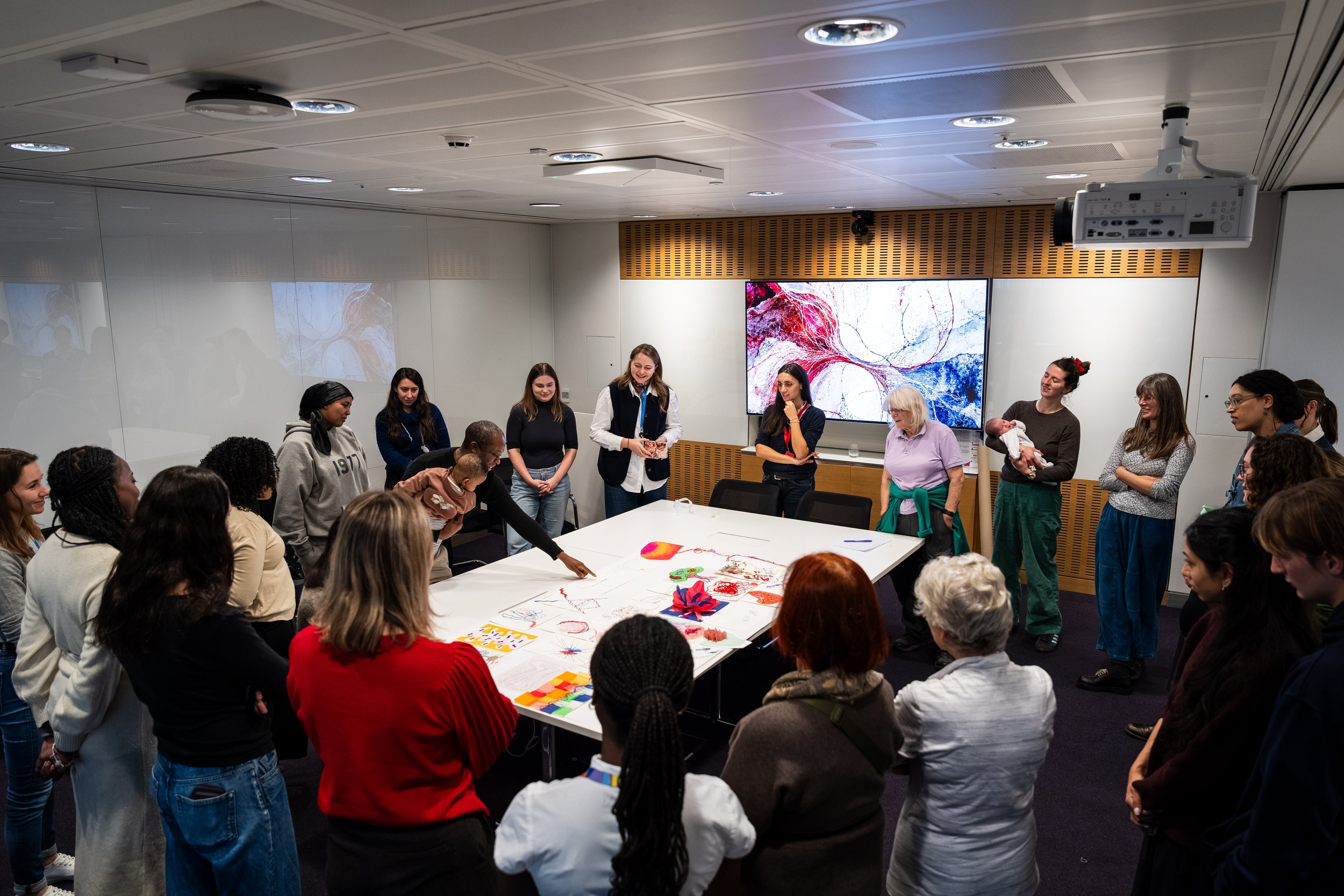
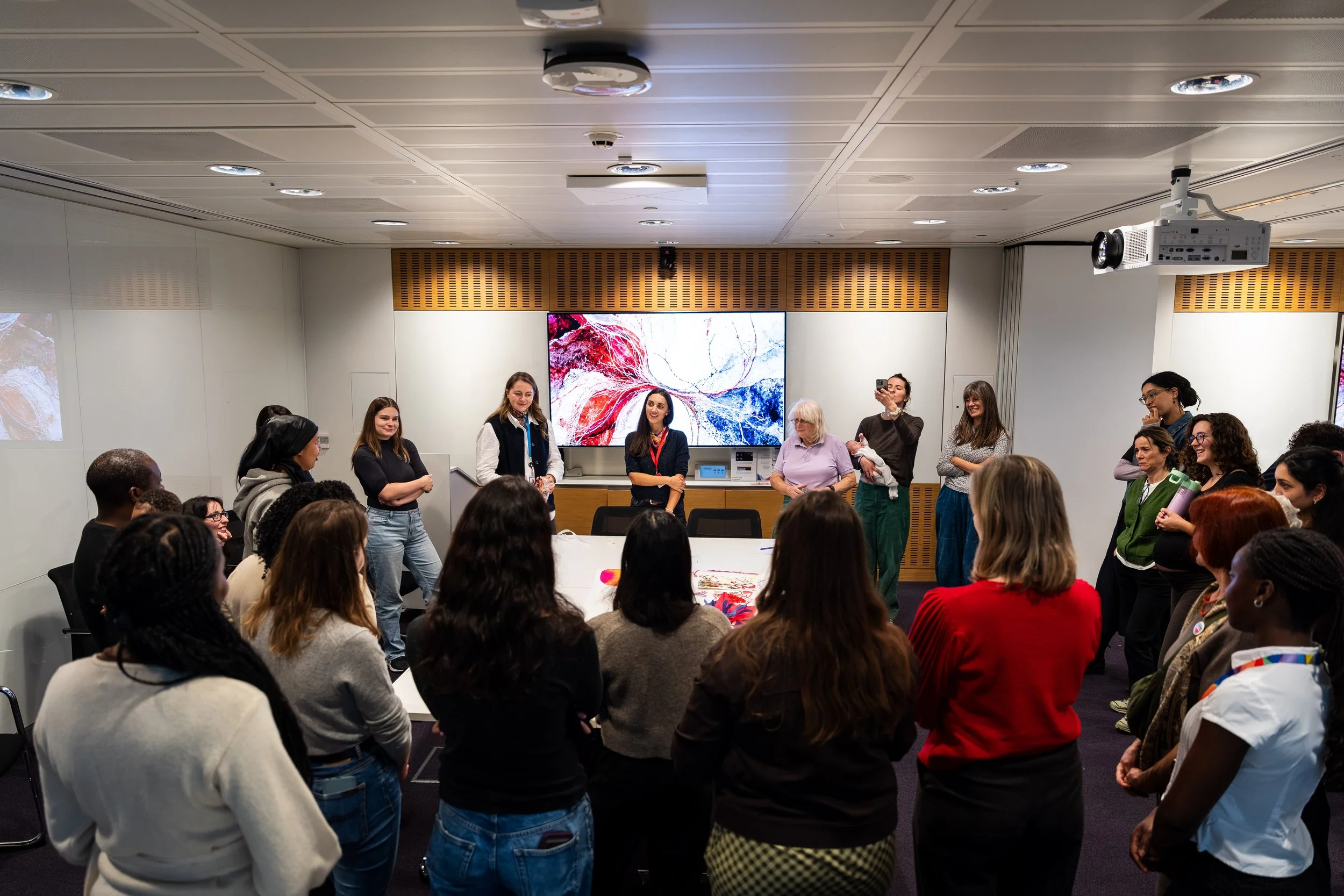
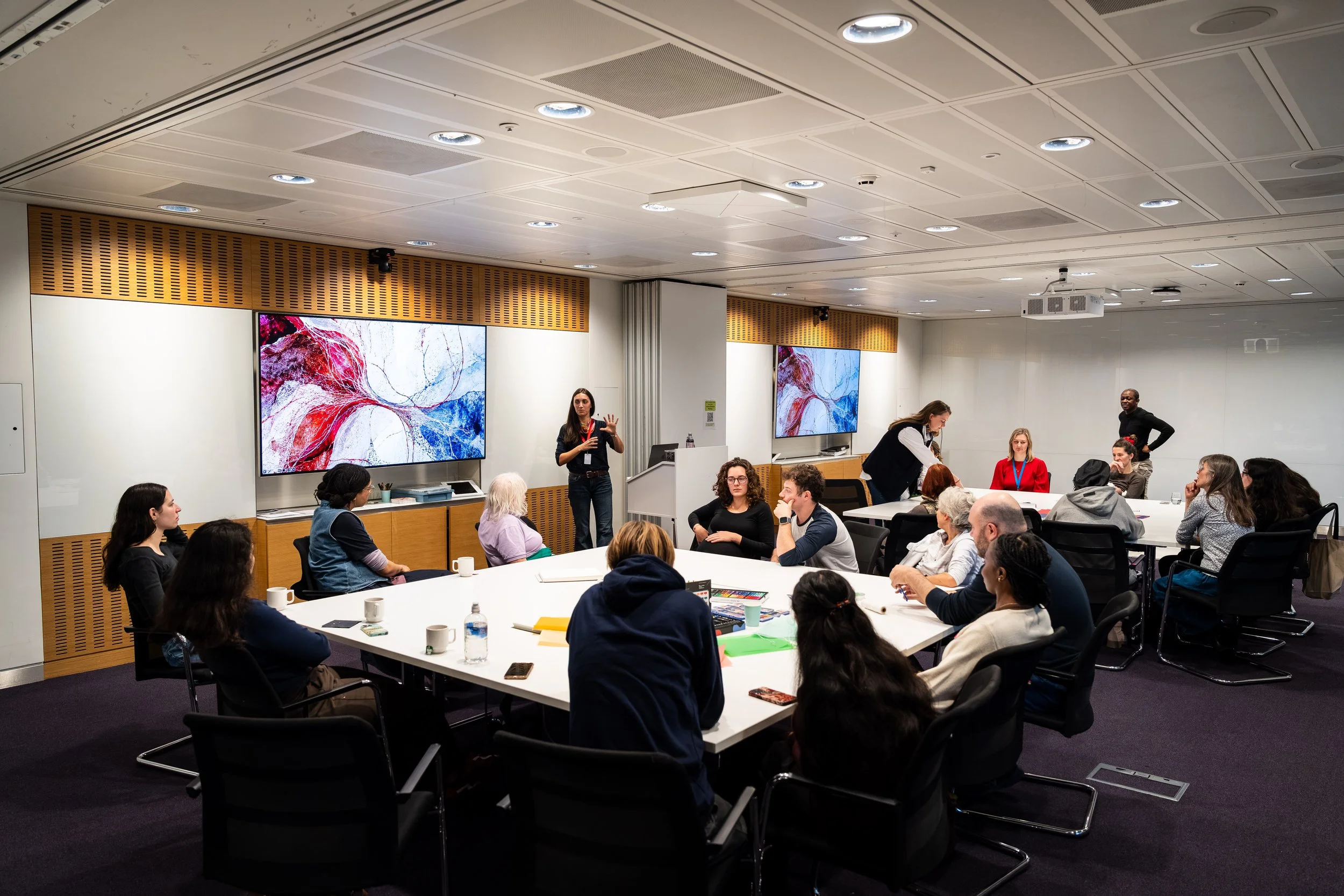
The placenta is one of the most extraordinary organs of human life, yet much of its work remains invisible to us. It quietly sustains, nourishes and protects, facilitating an intricate exchange between maternal and foetal environments. Developed in collaboration with scientists from King's College London and the Francis Crick Institute, Drawing Life’s Lifeline set out to make this remarkable biology more tangible — bringing scientific discovery into conversation with art, design and public participation. Rather than simply explaining how the placenta looks or works, the project invited people to imagine its unseen processes: the movement of oxygen and nutrients, the branching networks of exchange, the delicate boundaries between connection and separation. The guiding question was simple: if you can't see what the placenta does, how might you draw it?
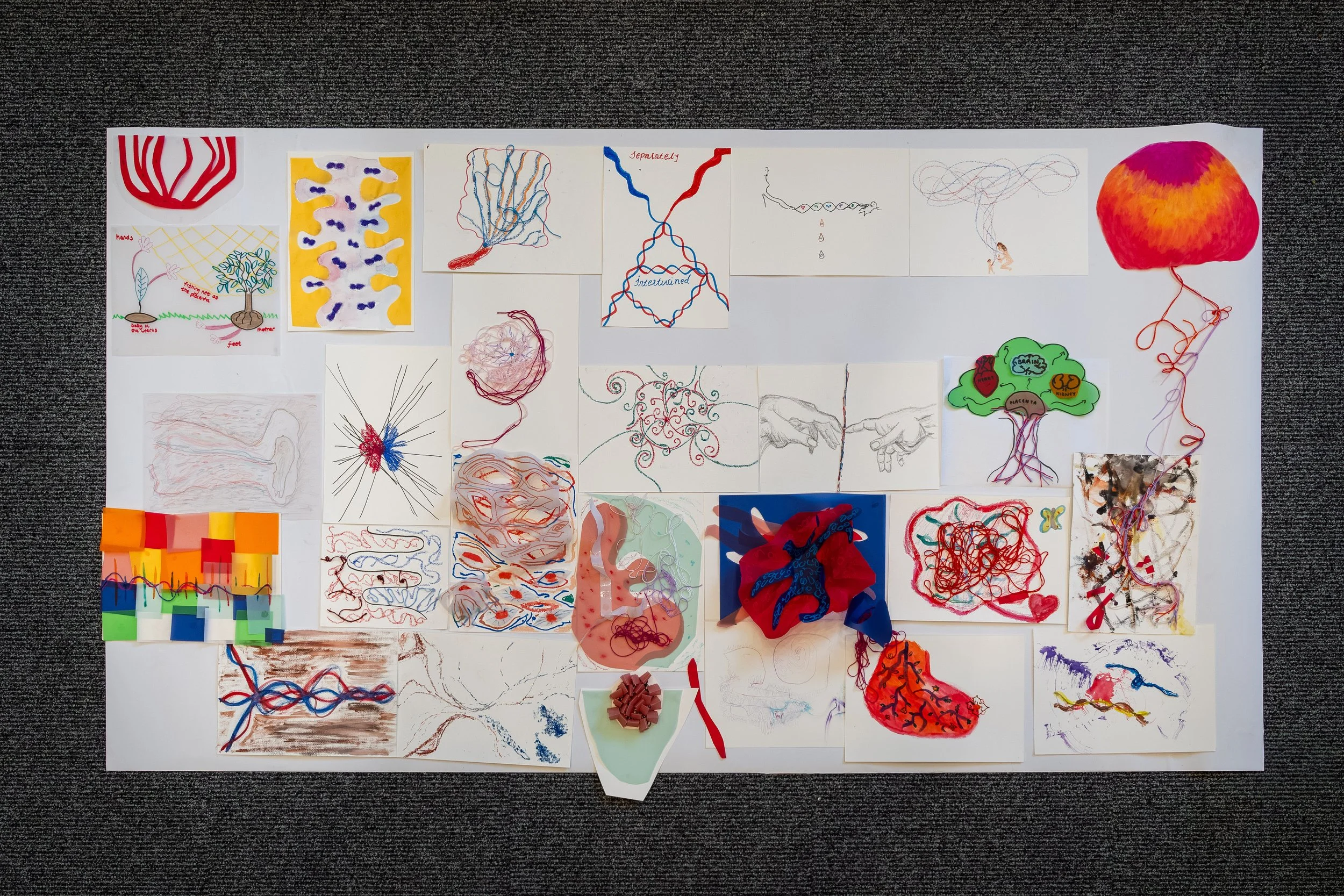
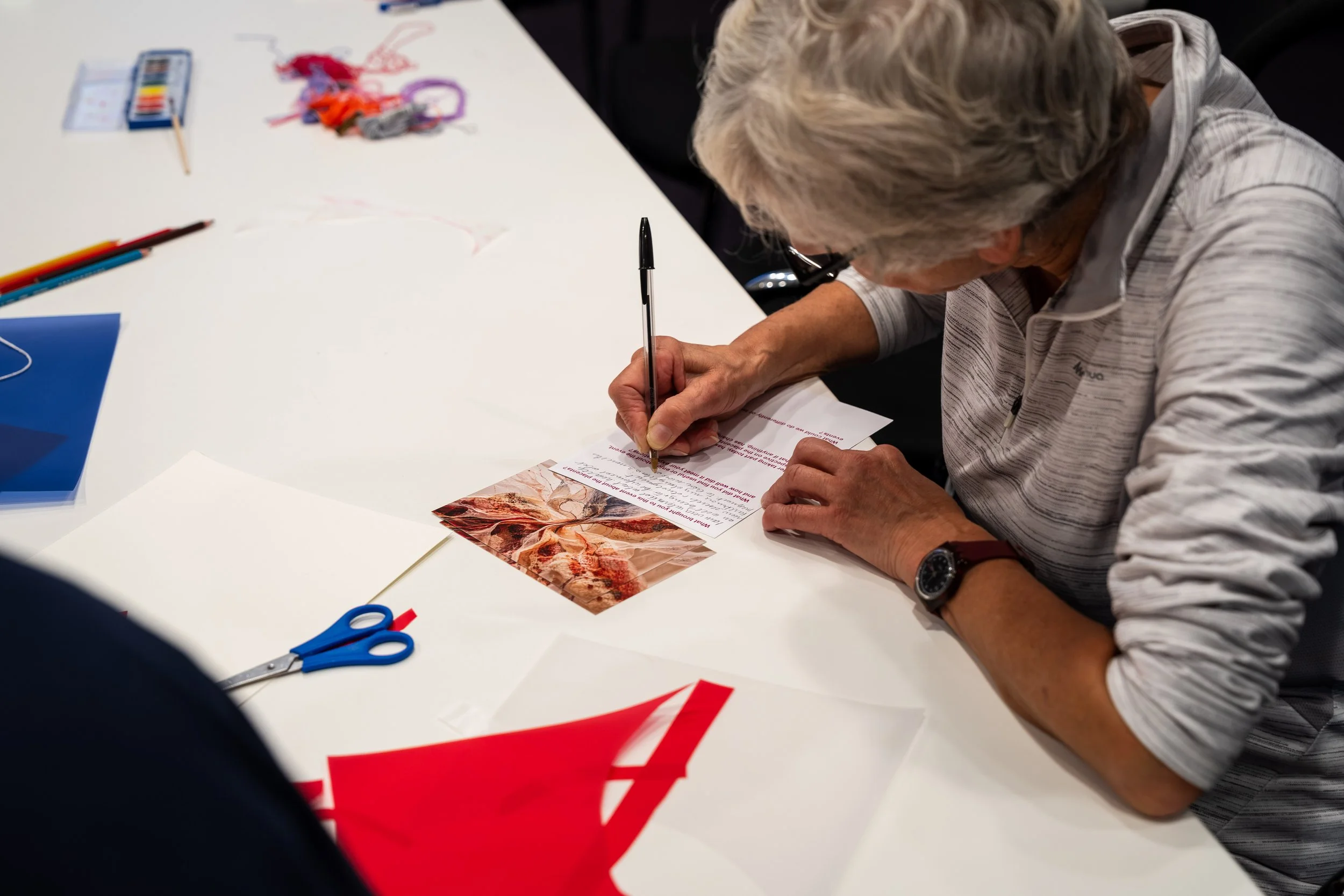
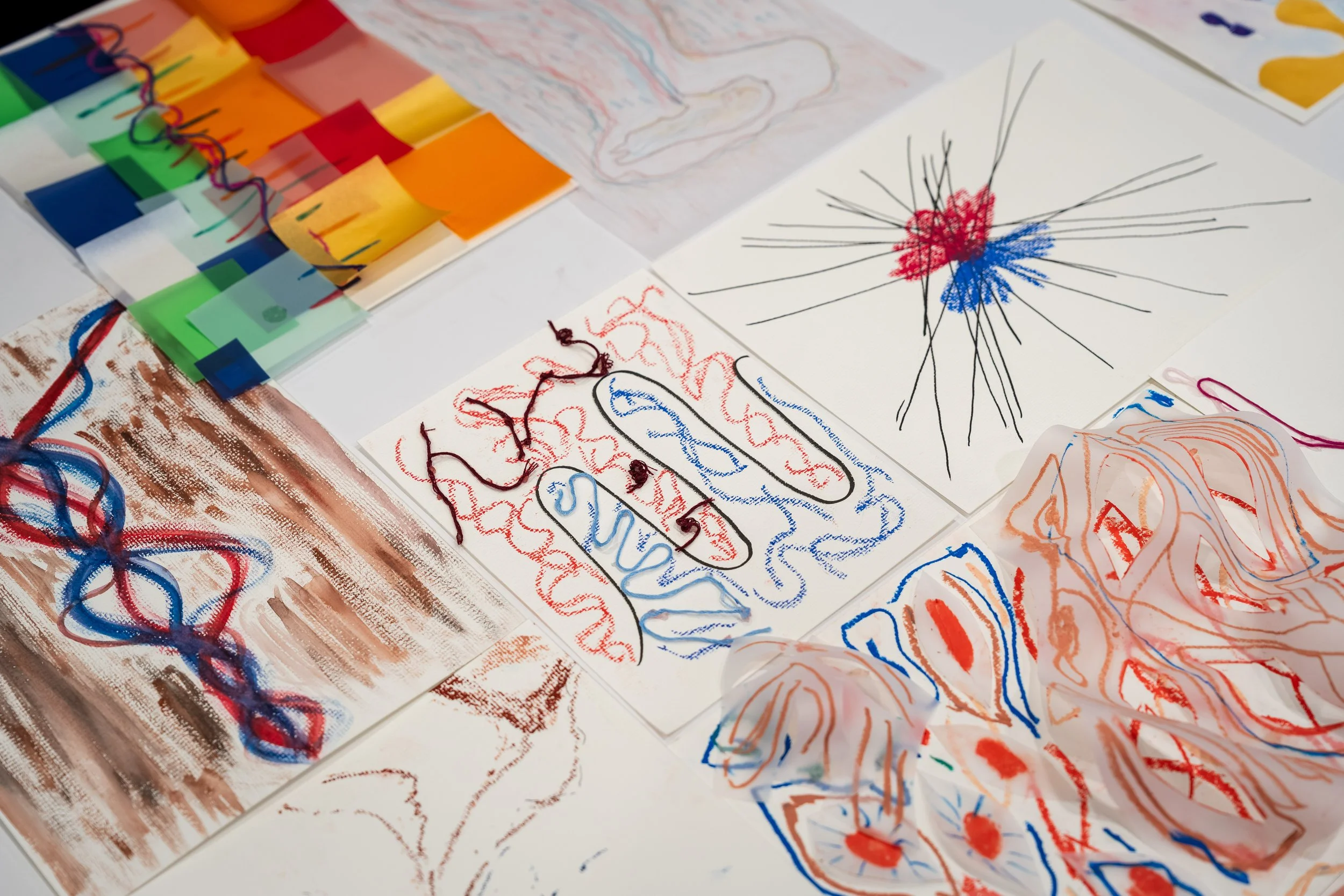
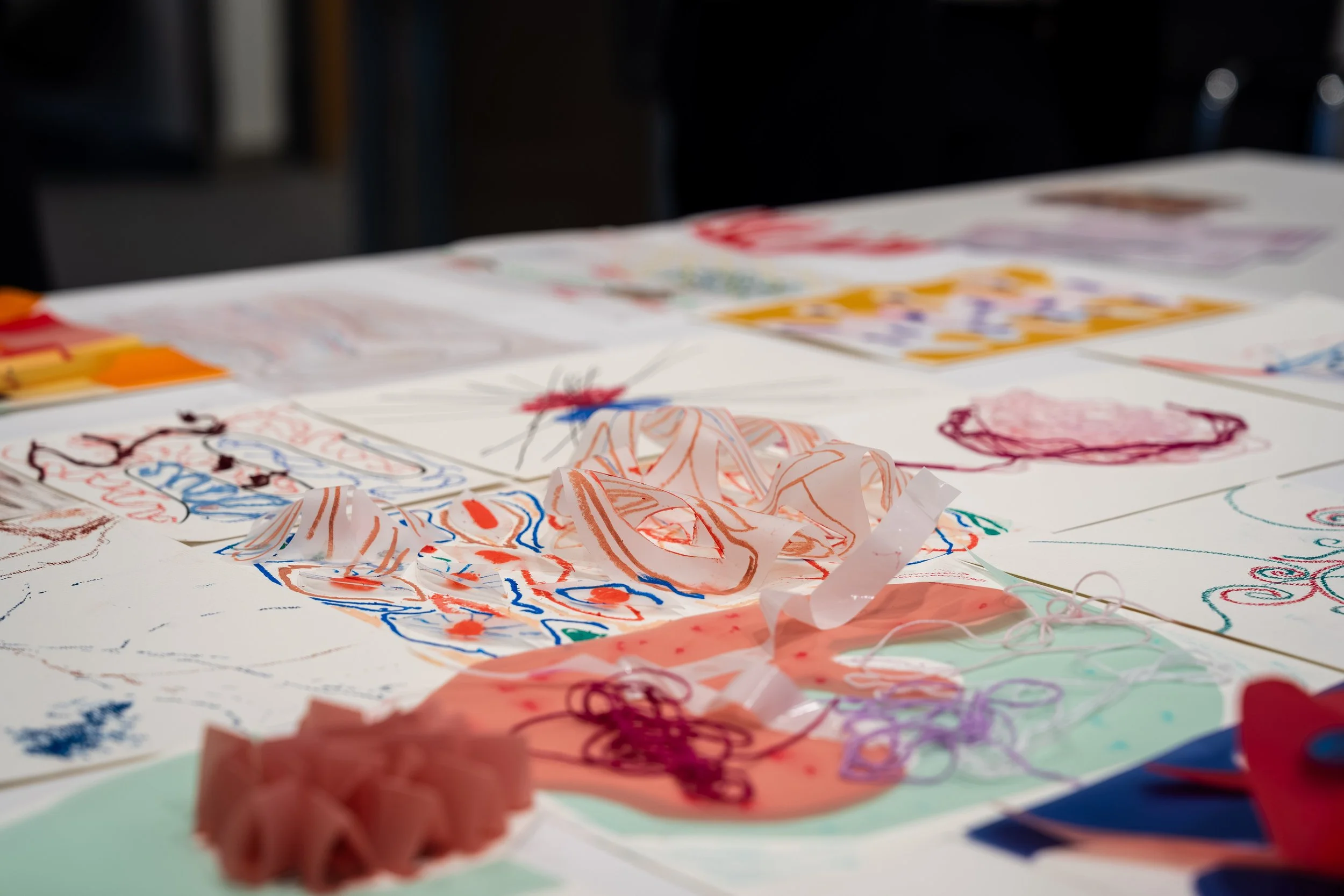
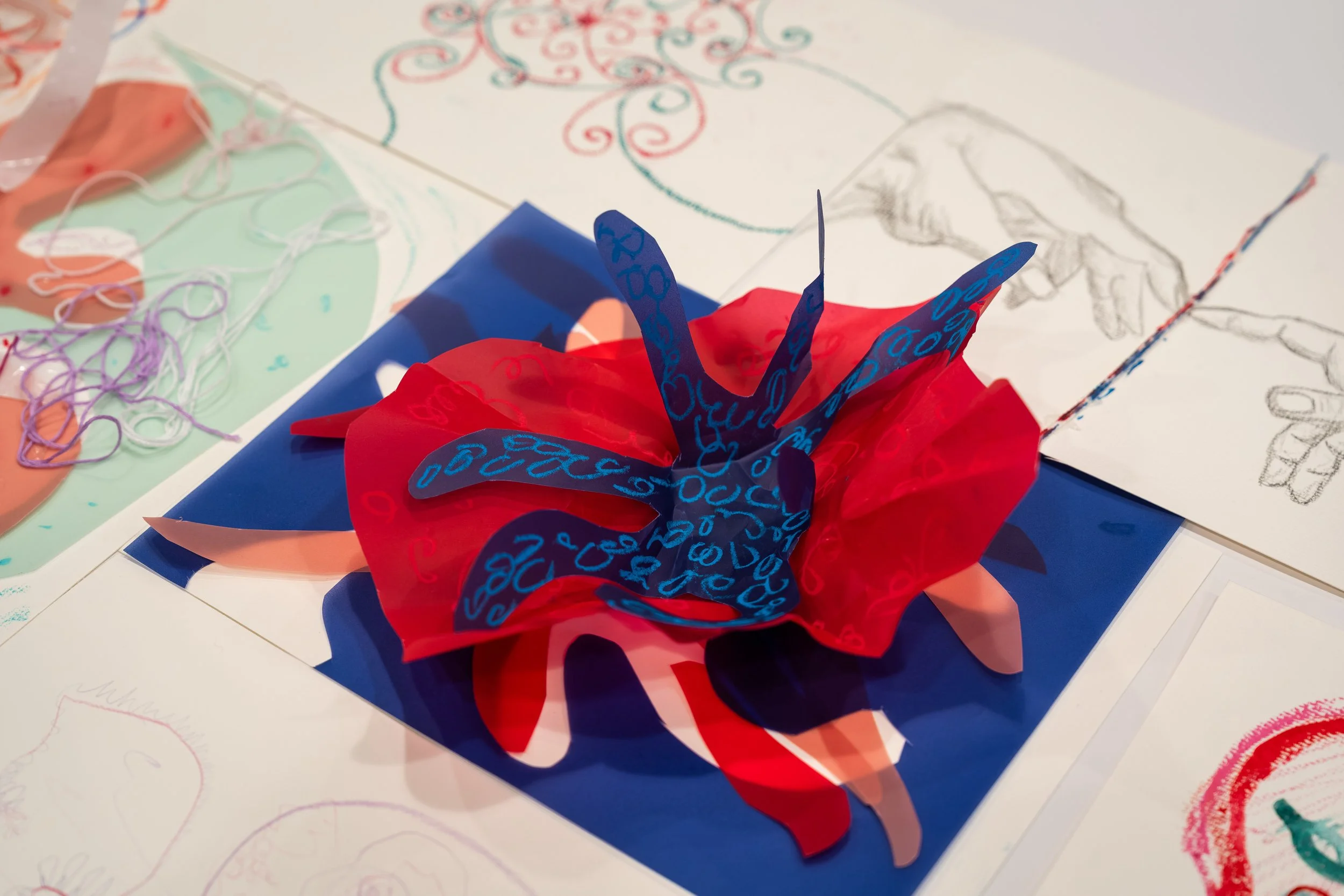
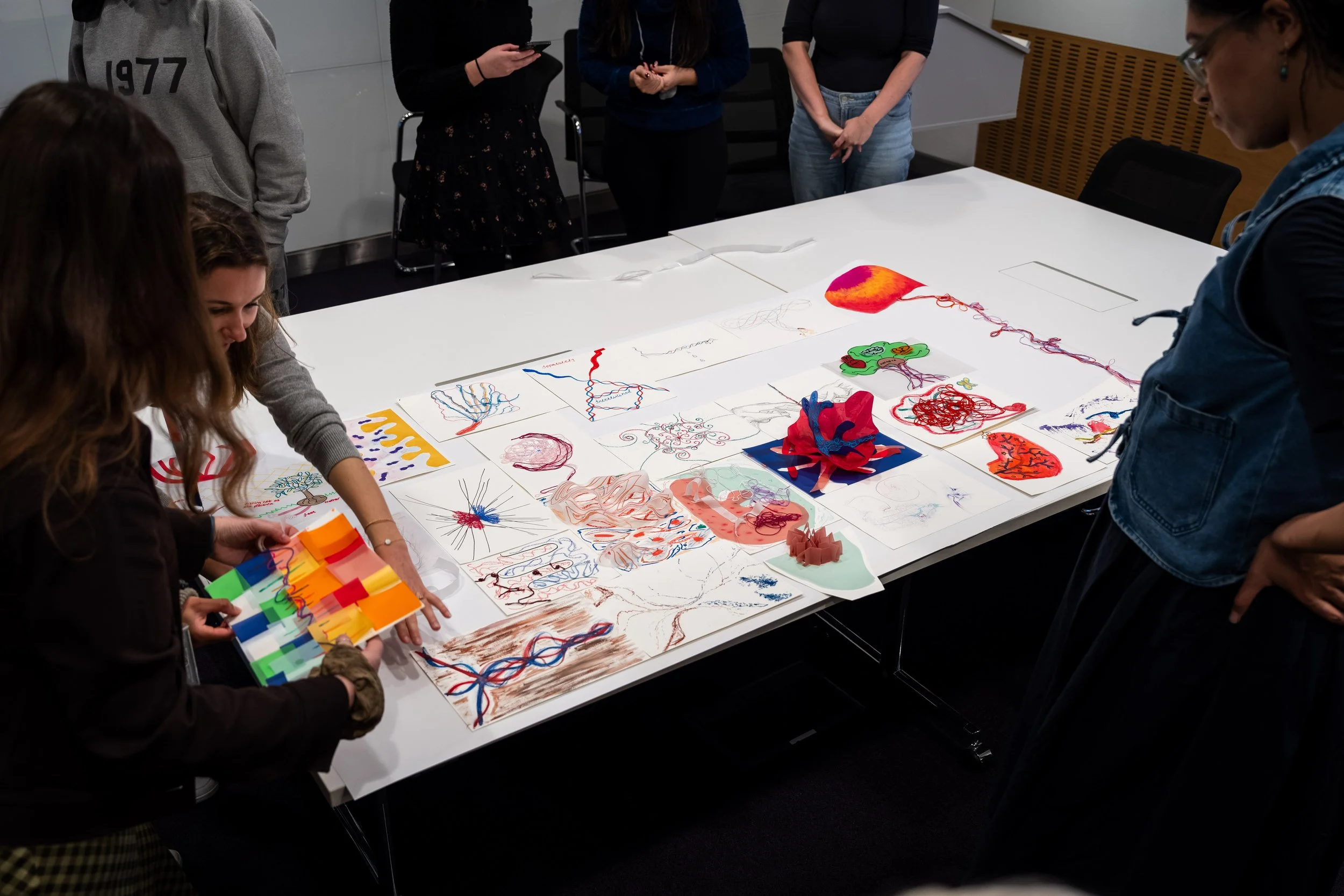
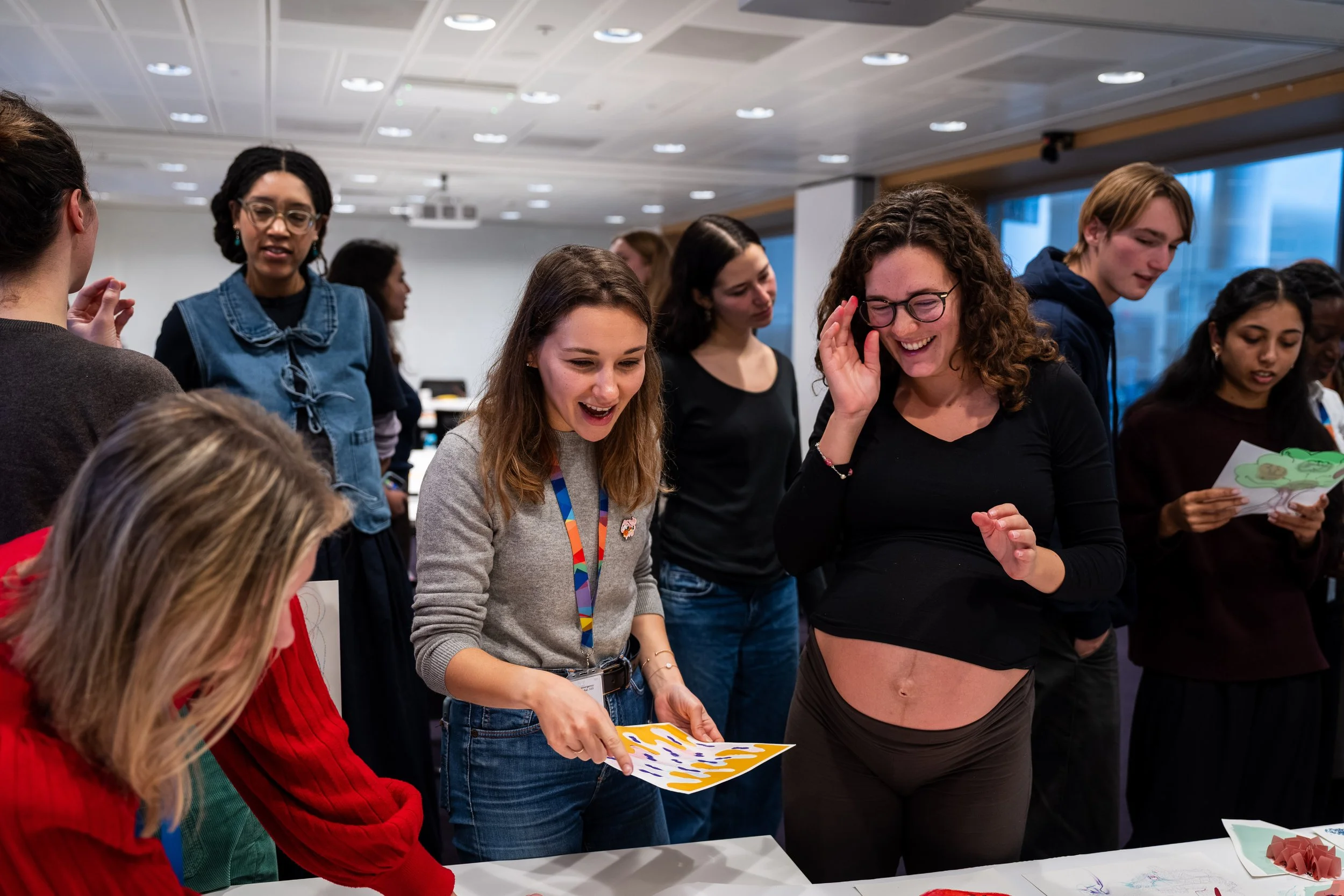
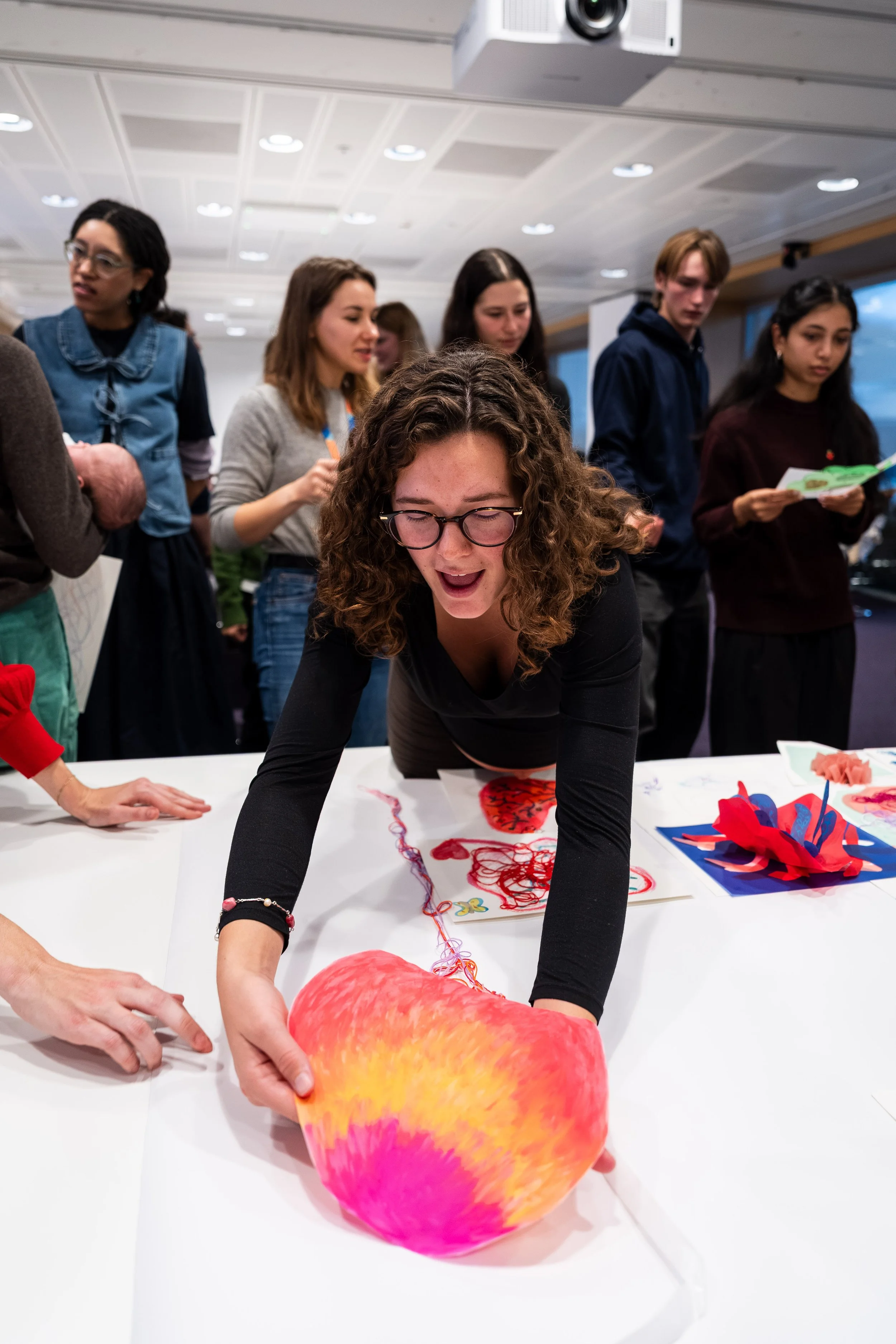
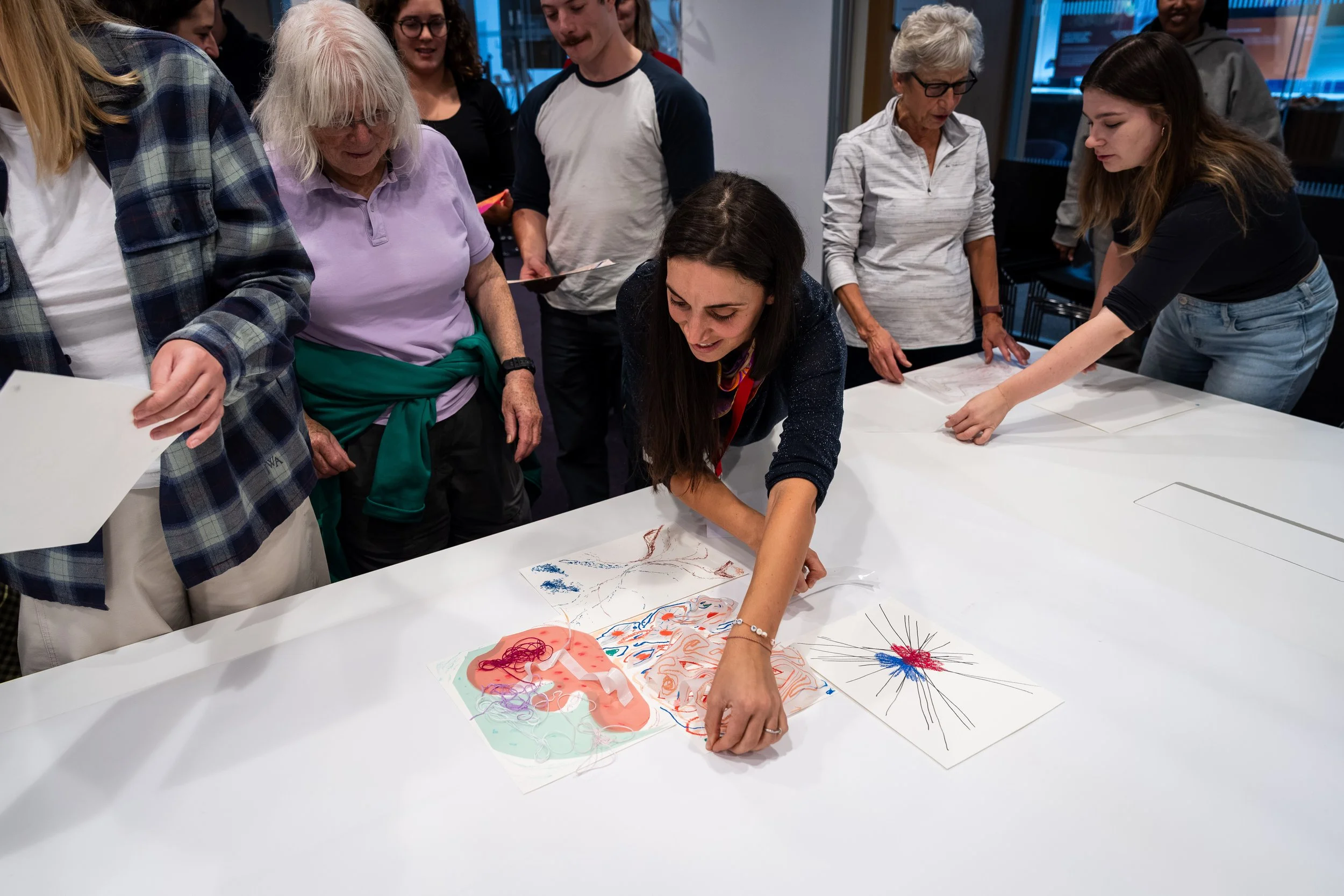
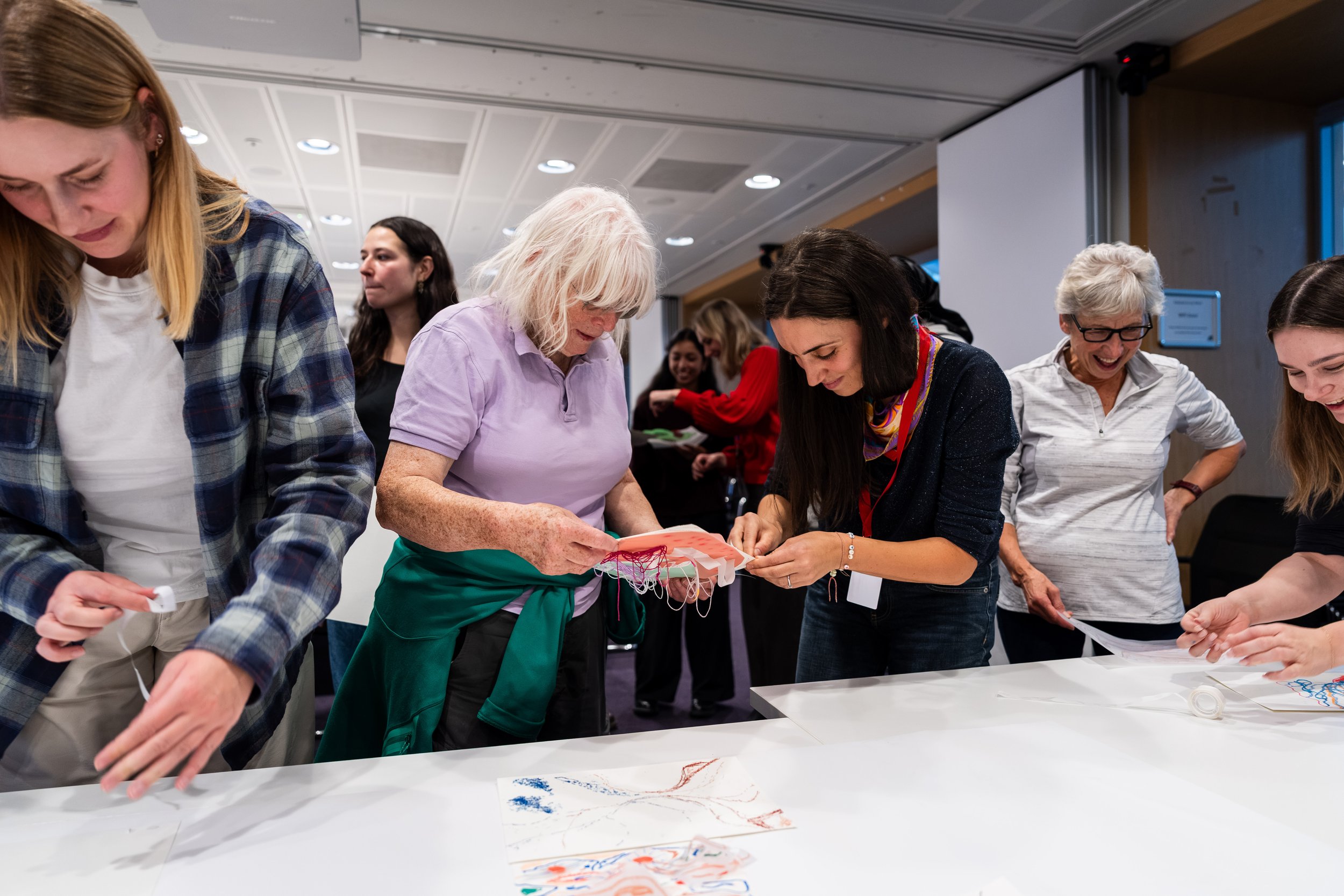
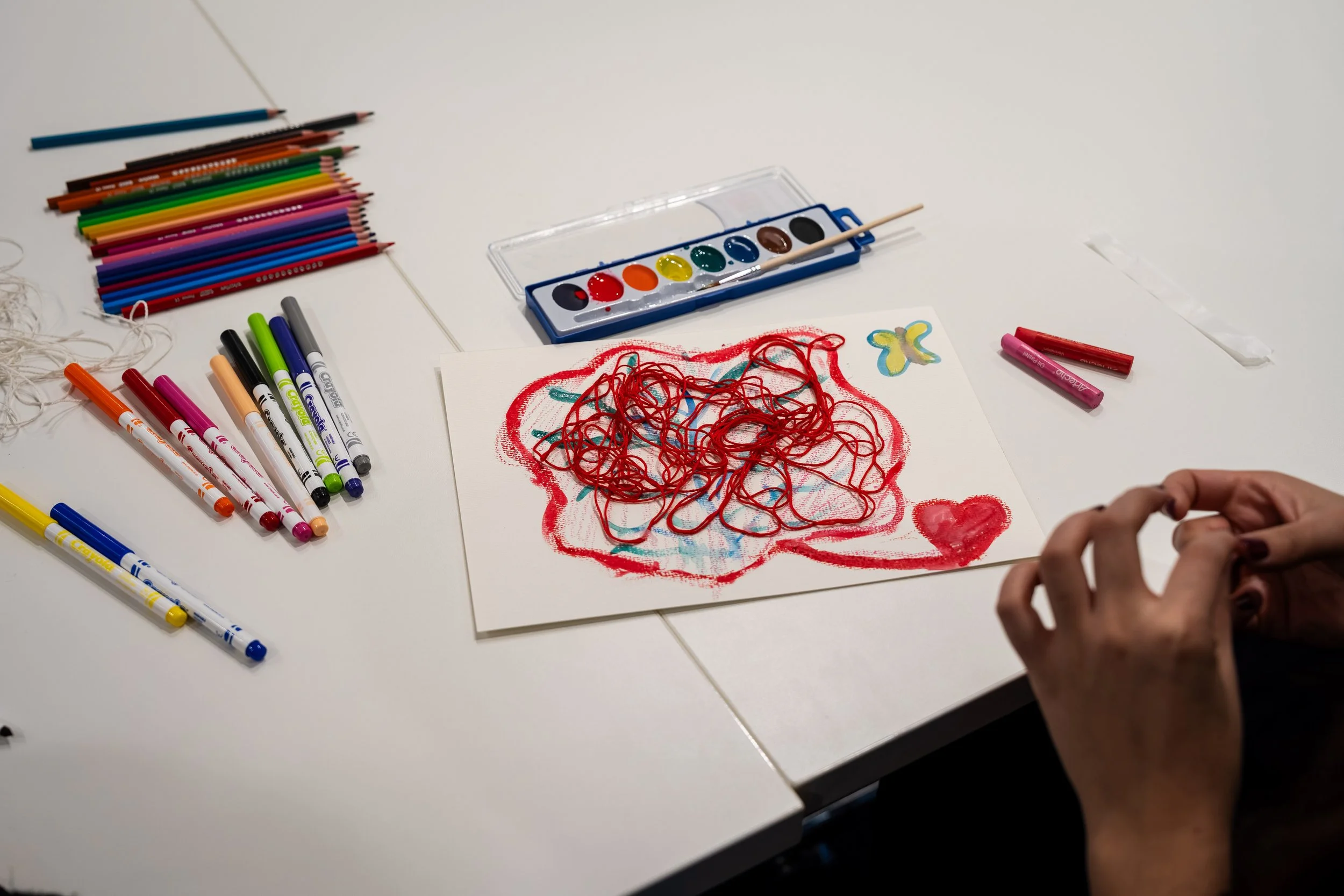
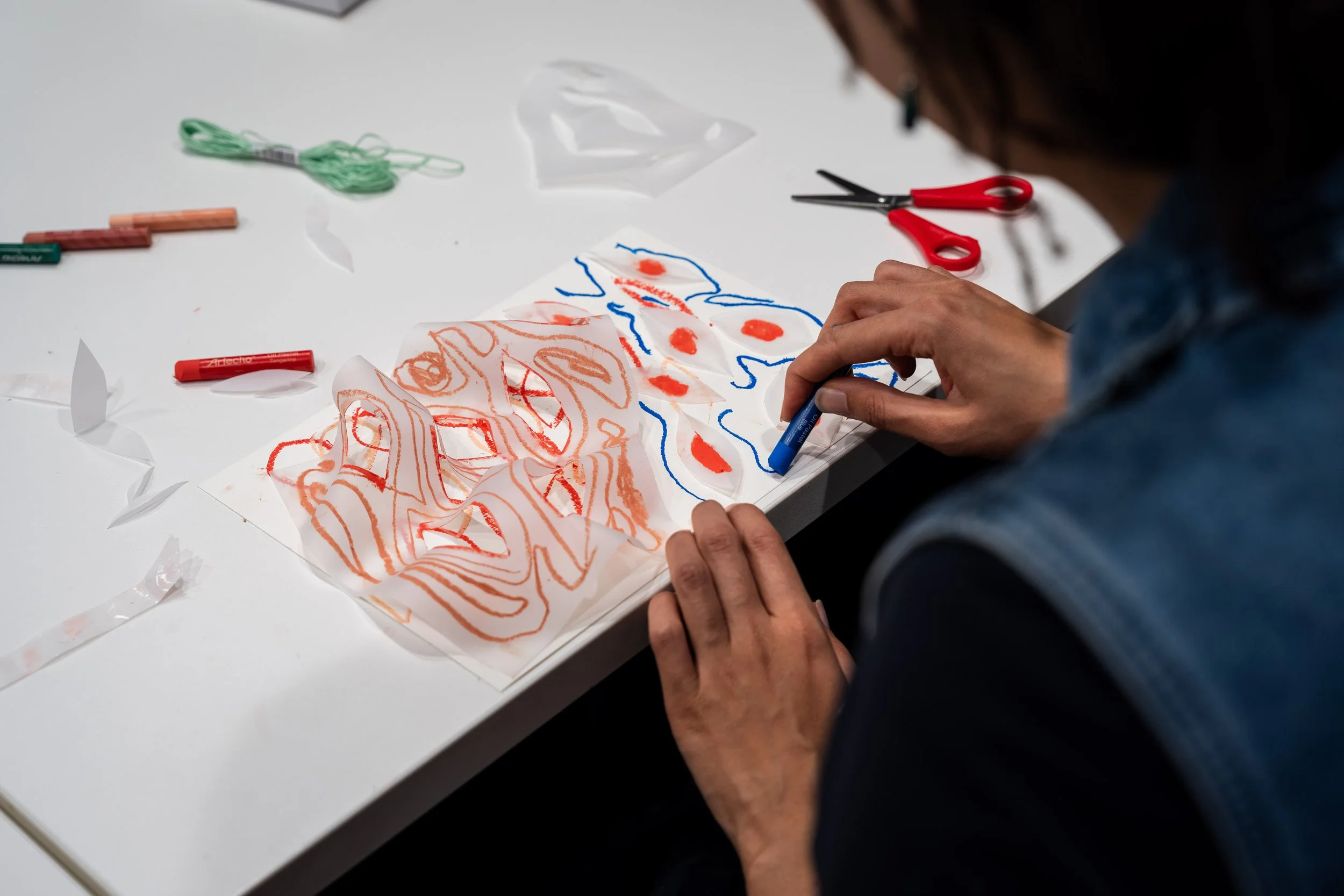
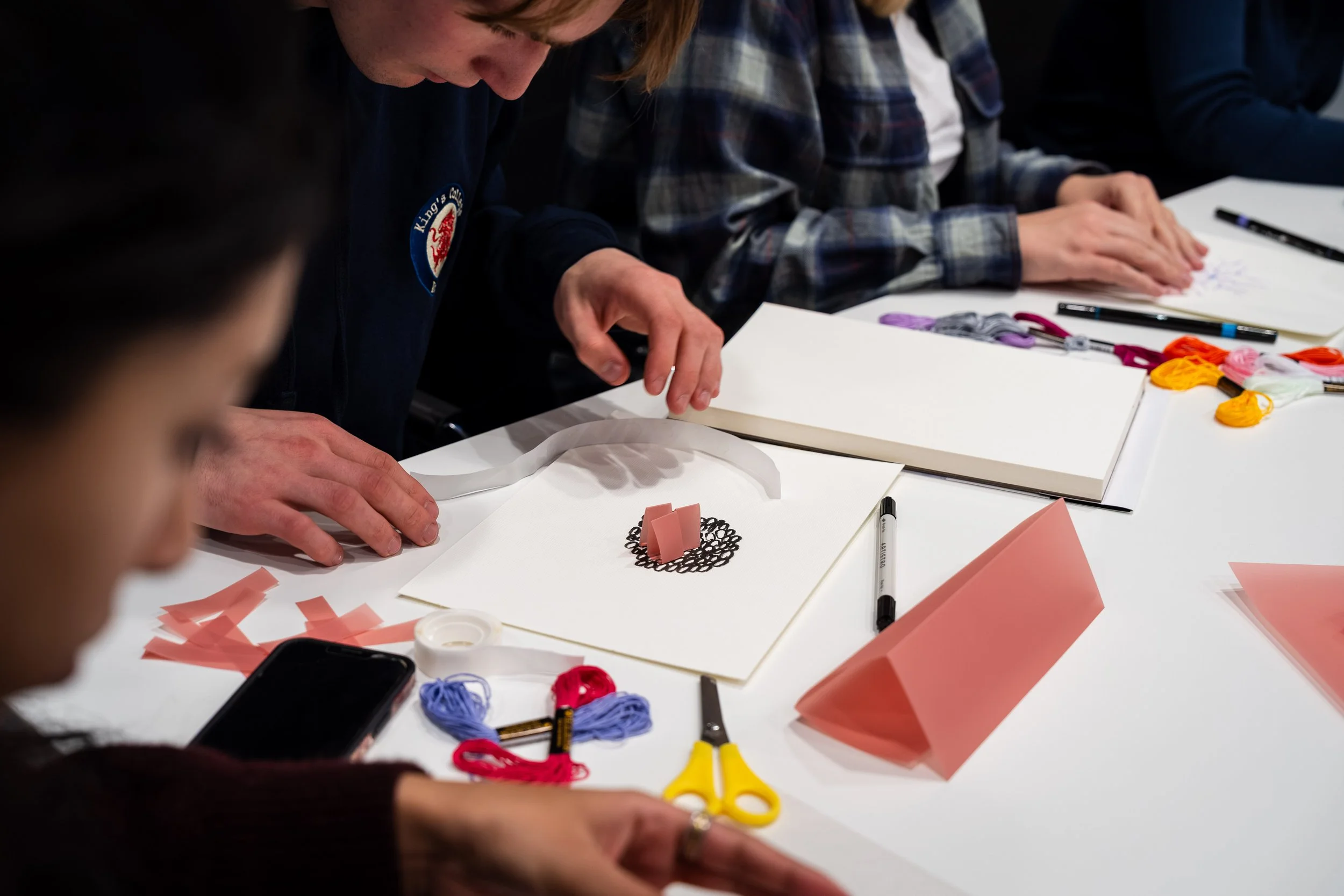
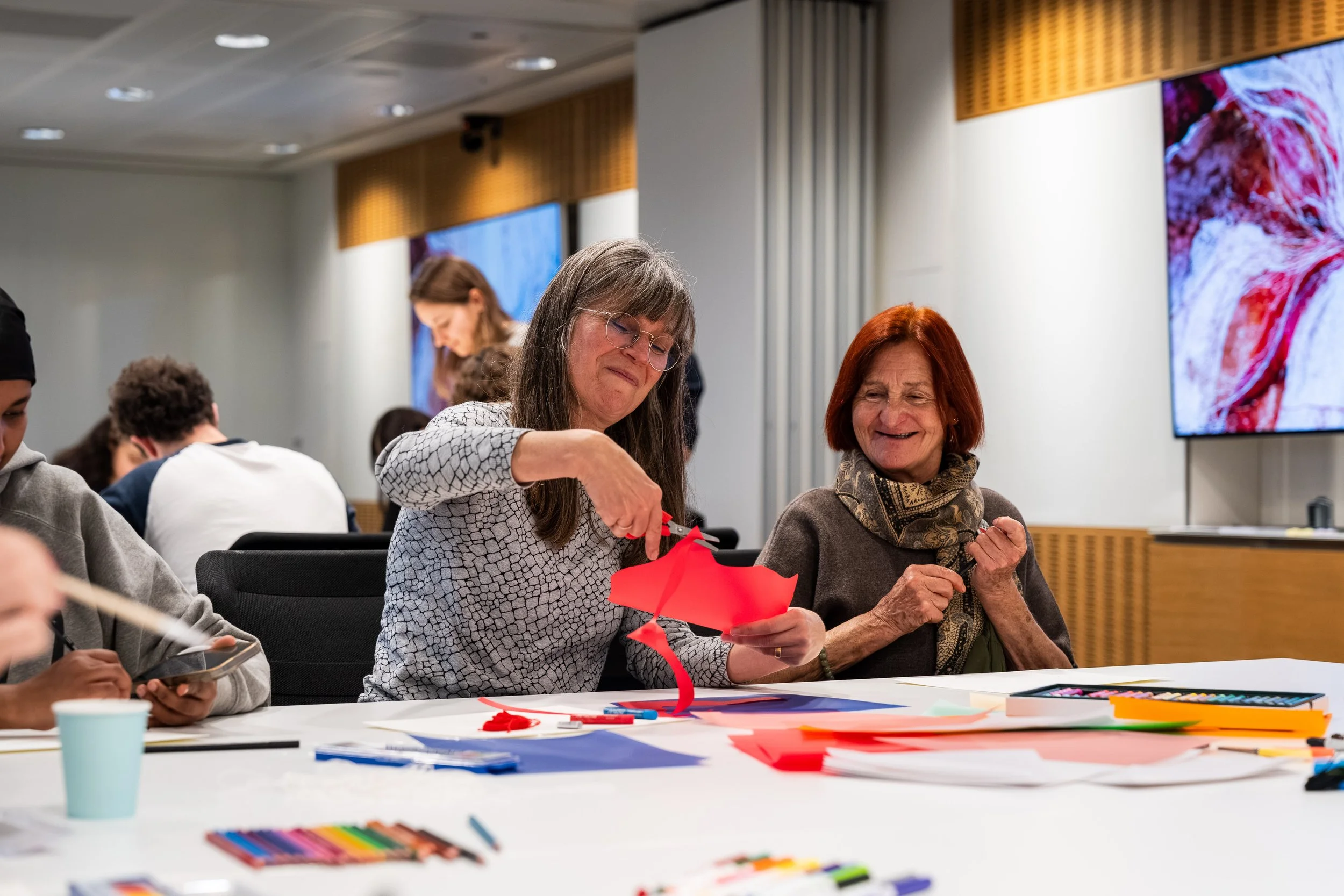
Members of the public were invited to create their own visual interpretations, using colour, line, texture and translucent materials to explore ideas such as connection, nourishment, protection, exchange and separation. There was no prescribed image to reproduce, and no requirement for artistic experience — only an invitation to look at the science through a different lens and find a personal visual language for it. The individual drawings were then brought together, connected through lines, threads and layered materials to form one evolving collective artwork. Each contribution retained its own character, yet became part of something larger: an intricate visual network in which no element existed entirely on its own. The resulting work became a metaphor for the placenta itself — a living system understood not through isolated parts, but through the relationships and exchanges that connect them. At its heart, the project explored how art can help demystify science, making complex ideas accessible, sensory and human; and how, just like the biology it sought to interpret, our individual perspectives can come together to create something far more meaningful than the sum of their parts.